Snow embellished the field during the Denver Broncos and New England Patriots’ AFC Championship matchup, making it nearly impossible for audiences in attendance to perceive yard lines. Those watching from the comfort of their home had the luxury of digitally imposed yard lines and numbering, akin to the augmented reality of first down and line of scrimmage markers.
However, the supposed enhancement only served to move the game from a sense of gritty realism into the video game visuals of “Madden NFL 26.”
Coupled with the blanket of snow upon the field, goliath-sized numerals and linework that could not differentiate between the ground’s newfound whiteness and the Patriots’ jerseys reminded audiences that although technology has evolved to better the health of athletes and team strategy, sports’ special effects remain stuck in the 90s.
The technology, which debuted in a game between the Cincinnati Bengals and Baltimore Ravens on Sept. 27, 1988, was met with a 92% approval rating on a Harris Poll conducted in 1999.
“For the first-down line to be acceptable to fans, it must look as natural as a yard marker painted onto the grass or artificial turf,” notes Matt Lake of the New York Times.
In the case of the Broncos and the Patriots, the effects looked anything but natural. The same can be said about the recent digitally imposed advertisements that appear on NBA courts and the eventual digital inclusion of an inconsistent NBA Finals logo.
In response to the slipperiness of court decals and in the interest of player safety, the league decided to remove championship branding on the hardwood in 2012.
However, fan backlash to the lack of Finals branding prompted NBA Commissioner Adam Silver to take action during the 2024-25 season.
“Maybe there’s a way around it,” Silver said, as covered by The Athletic. “To be honest, I hadn’t thought all that much about it until I [saw] it [on social media]. I’m nostalgic, as well, for certain things. And also, I think for a media-driven culture, whether it’s people watching live or seeing those images on social media, it’s nice when you’re looking back on highlights and they stand out because you see that trophy logo or some other indication that it’s a special event. So, we’ll look at it.”
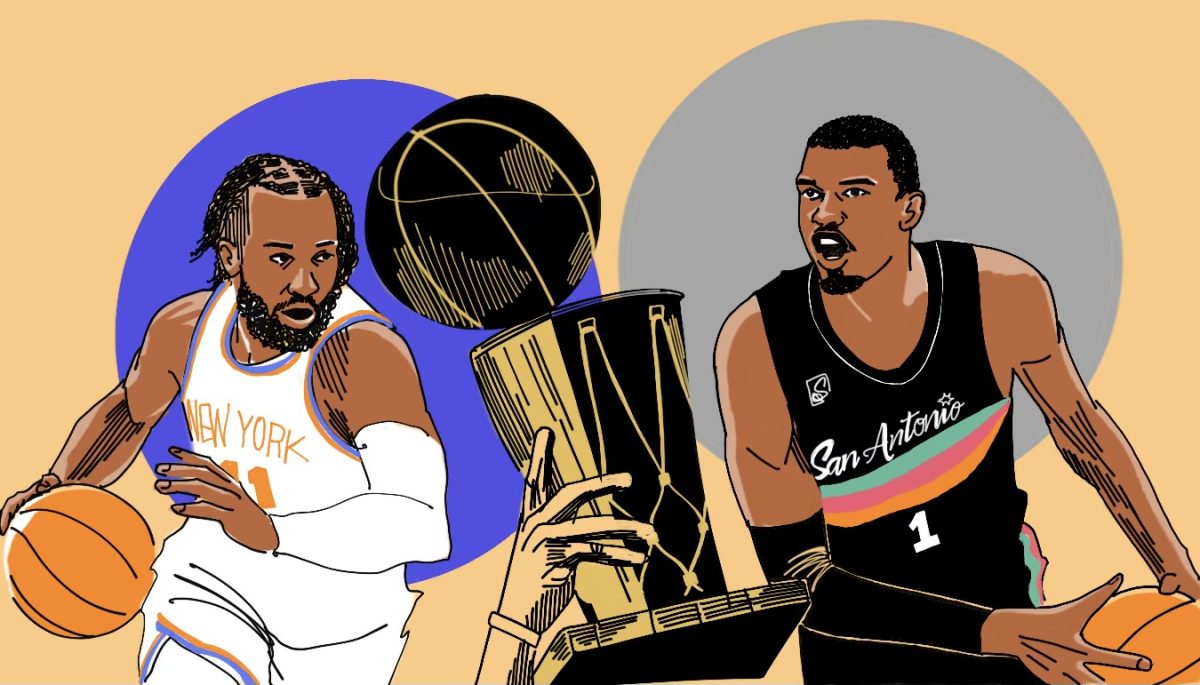
Silver’s solution was to digitally replicate the logos, a technique already being done for on-court advertisements, in Game 2 of the NBA Finals. The addition of a computerized Larry O’ Brien trophy created a jarring visual when viewed alongside painted advertisements for Michelob Ultra and YouTube TV.
Sports broadcasting brings the spectacle of the sports world to the living rooms of so many viewers, yet some broadcasting networks forget to let the players’ athleticism be the main draw of the game. Technological inclusions hinder the wonder of athletic feats in exchange for a lackluster attempt at visual engagement.