The UT San Antonio Model United Nations Society recently won the Distinguished Delegation award — a team honor granted based on position papers, speaking and diplomacy — while representing Cameroon at the National Model United Nations Conference in New York City. Throughout the conference, members of the UTAS MUNS team made connections with students from around the globe, gained leadership skills and delegated for a country that is perceived as challenging due to its lesser economic and political prowess when compared to world powers, such as China or the U.S.
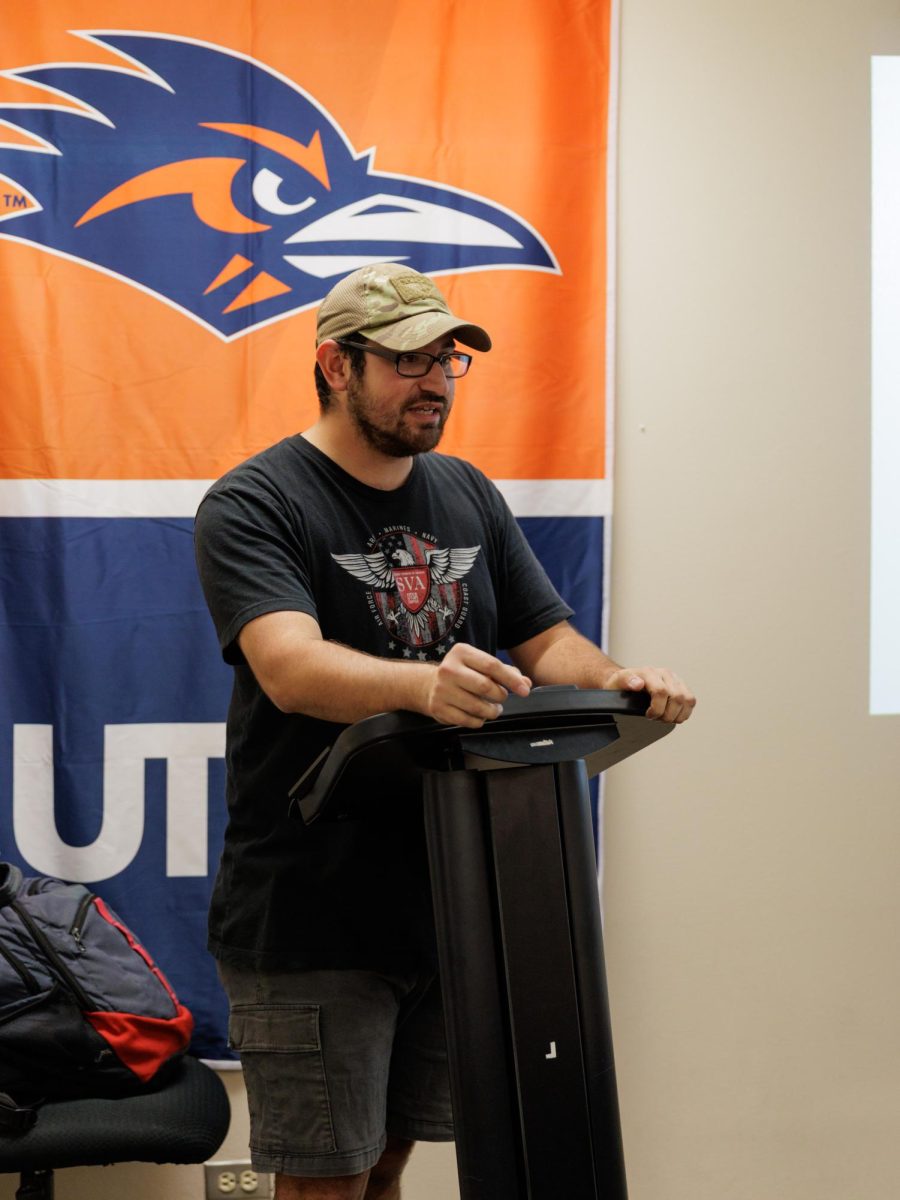
Political Science and Geography Professor Matthias Hofferberth, the faculty advisor for UTSA MUNS, provided some insight on the challenge of representing Cameroon.
“Representing Cameroon is not easy — most of us knew little about this country before we began our preparation. As such, students develop research skills and strategies and become more globally aware of the simple truth that world politics [looks] different from a different positionality,” Hofferberth explained.
“This leads to a more empathetic outlook in general — as a good diplomat, you need to listen and be open-minded before you lead a group to find common solutions. This balance between listening and leadership, in addition to navigating Mid-Manhattan and surviving it with little sleep over five days, helps students become more engaged and change their perspective on their program of study,” Hofferberth said.
Hofferberth also mentioned that receiving the Distinguished Delegation Award was a recognition of a job well done rather than a prize.
“It is not so much a victory (as in defeating others) but more a recognition of hard work and what you can achieve,” Hofferberth detailed. “I hope receiving the Distinguished Delegation Award, something that we had not achieved in the past, will show every student that if you commit and work hard, if you become part of a group that is bigger than yourself and that is there for you, and if you are willing to move out of your comfort zone and embrace the idea of listening, learning, and leading, you can achieve a lot more than you thought you would be capable of in the first place!”
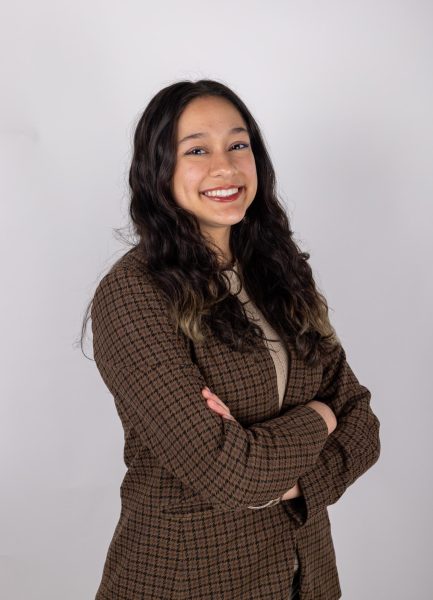
The Paisano had the opportunity to interview four of the students who attended the conference: junior global affairs major Emily Palmer, senior international relations major Clarissa Delgadillo-Tabuenca, junior global affairs major Chandler Harris and senior microbiology and immunology major Eden Dill.
Dill explained the logistics of the competition and its collaborative nature.
“We all represented Cameroon, just in different councils,” Dill stated. “We are competing, and we did win an award, but I like to think of it less as competing and more as collaborating.”
Palmer expanded on the connection building aspect of the conference.
“Many people came from Canada, even Japan or China, and they get to talk about their own school processes and there is a lot of casual conversation and friendship that is built,” Palmer said.
Dill went on to explain that the conference size can be intimidating.
“I was in a larger council, so [the] total [number of] people in the room was two or three hundred,” Dill remarked. “So, I think it is a little bit overwhelming. It’s like, where do I start? I have to talk to these people and all that, but this kind of goes with the connections that you make. I think as you warm up and as you talk to people and connect with them and work towards this common goal, it is much easier to come out of your shell.”
Delgadillo-Tabuenca explained the rewarding feeling of earning the award.
“There wasn’t an actual material prize or medal or anything like that, but I feel like when you work so hard, especially if it’s just verbal and policy wise, and you get that recognition, it’s just so fulfilling,” Delgadillo-Tabuenca noted.
For anyone interested in getting involved with UTSA MUNS, Harris explained that the easiest way is to just go for it.
“Put yourself out there. I think that Model UN specifically is probably one of the safest spaces to argue and debate there is,” Harris articulated. “Because you’re not just going up in a regular debate class where it’s just ‘It’s her speaking time,’ and ‘It’s their speaking time.’ It’s you on your own in an informal way. The initiative of having to argue and connect with people completely on your own. And that’s really good for you.”