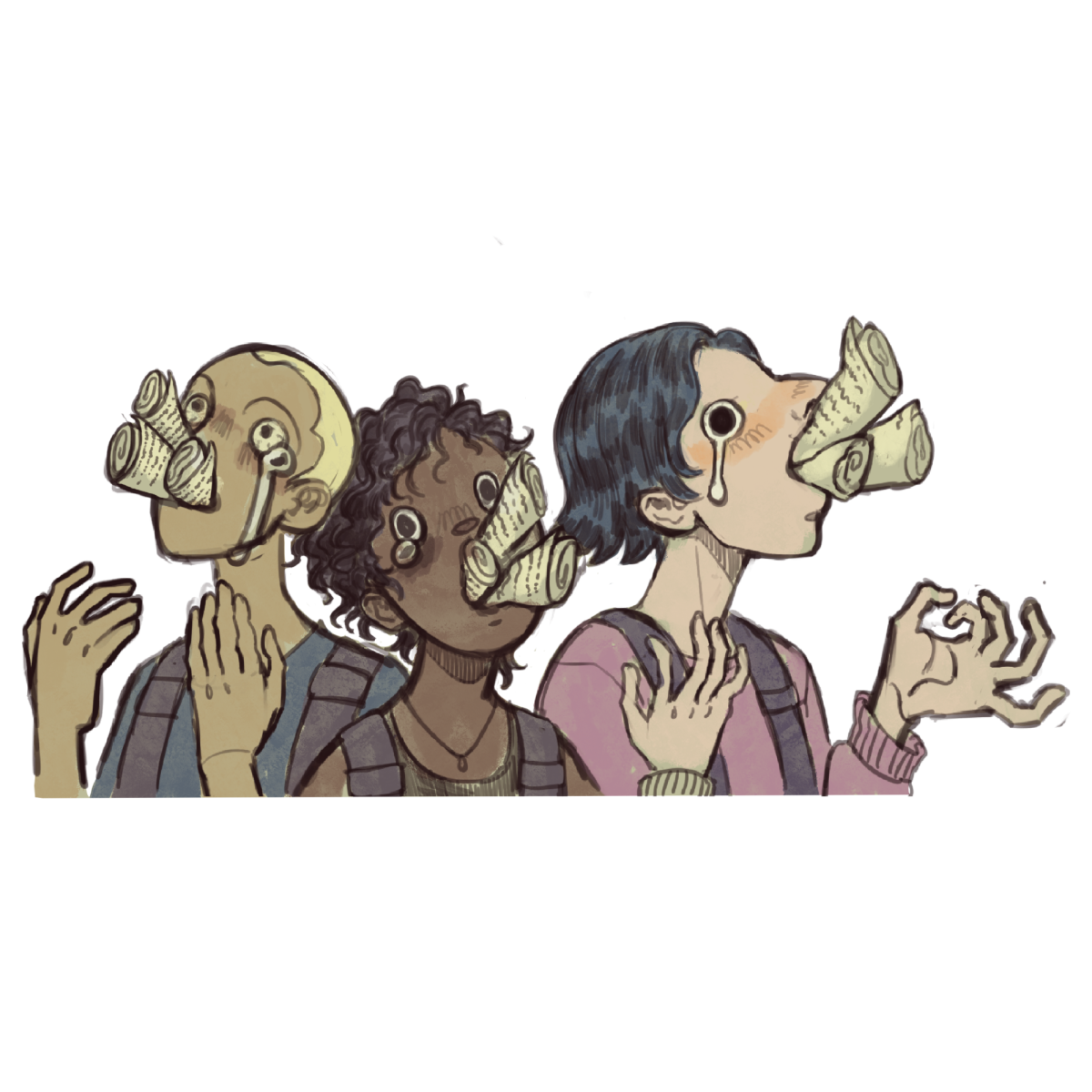
Imagine a young student looking at the wall for classroom material and seeing the Ten Commandments. That student may now assume that it is related to school and feel the need to follow its rules and be prepared for the consequences if they do not.
This sentiment is becoming a reality in Texas schools due to Gov. Greg Abbott’s signing of Senate Bill 10, which went into effect on Sept. 1. It is unconstitutional because it lacks secularity, endorses a specific faith and puts coercive pressure on children who are forced to attend school — a clear violation of the Establishment Clause, which prohibits the government from establishing one religion above another.
SB10 requires every classroom in Texas to display the Ten Commandments in a “conspicuous place.” The commandments must have no additions or embellishments with Protestant wording, and the framed poster must be at least 16 inches wide by 20 inches tall with text legible from anywhere in the classroom. This is a sectarian, unconstitutional choice with no curricular context for government-mandated teachings.
Multiple anchors make SB 10 unconstitutional, one of which is the Establishment Clause, which states that the government must be neutral toward religion in all aspects. Others include similar court cases, the Lemon guidepost and three prongs.
The first case is Stone v. Graham. In Kentucky in 1980, a similar statute requiring every public school to display the Ten Commandments was struck down for being unconstitutional and serving no secular purpose. In Louisiana, an almost identical law was passed in 2024, HB 71, but it was later enjoined by the Fifth Circuit Court of Appeals as a plainly unconstitutional law under Stone v. Graham.
After Abbott passed the law, a preliminary injunction blocked enforcement in Texas counties because the court found Establishment and Free Exercise violations. The purpose of the Ten Commandments being posted supports religion while having no genuine nonspiritual aim. This effect will indoctrinate children with the idea of a state-preferred morality that can create outsiders of those who do not follow the same ideology. These students are being forced to go to school by state law, and these ten rules on the board will function as school and state rules.
Furthermore, this bill can have unforeseen educational and practical consequences in schools because the Ten Commandments are worded following Protestant tradition. This rhetoric is different from the Jewish and Catholic wording of the Ten Commandments, which degrades Protestant views. School climate can also be affected by isolating children with nonreligious backgrounds or creating division among students. Students may also be given ideas that their parents would not like, such as asking what adultery is at an early age, since it is stated in the commandments.
Moreover, Abbott insisted the bill “safeguards the individual freedoms that our great state was founded on.” However, forcing a single sectarian document into every classroom does the opposite. It restricts religious freedom by showing one religion in classrooms and pressuring those who do not follow the religion to consume its doctrine. Another argument for keeping the bill is history and tradition, but there is no enduring tradition of classroom postings due to Stone v. Graham. The Ten Commandments cannot be seen as passive decor akin to the statue in the Capitol; the poster would be official speech in a captive and controlled setting.
Abbott insists that this law protects freedom. In truth, it does the opposite. Real freedom in America comes from the freedom of religion. This means when a child enters class, they will not be told who to worship.
The U.S. Constitution does not allow schools to play preacher, and courts have already struck down this law in other states; that is the freedom the First Amendment promises, and Texas should follow it.