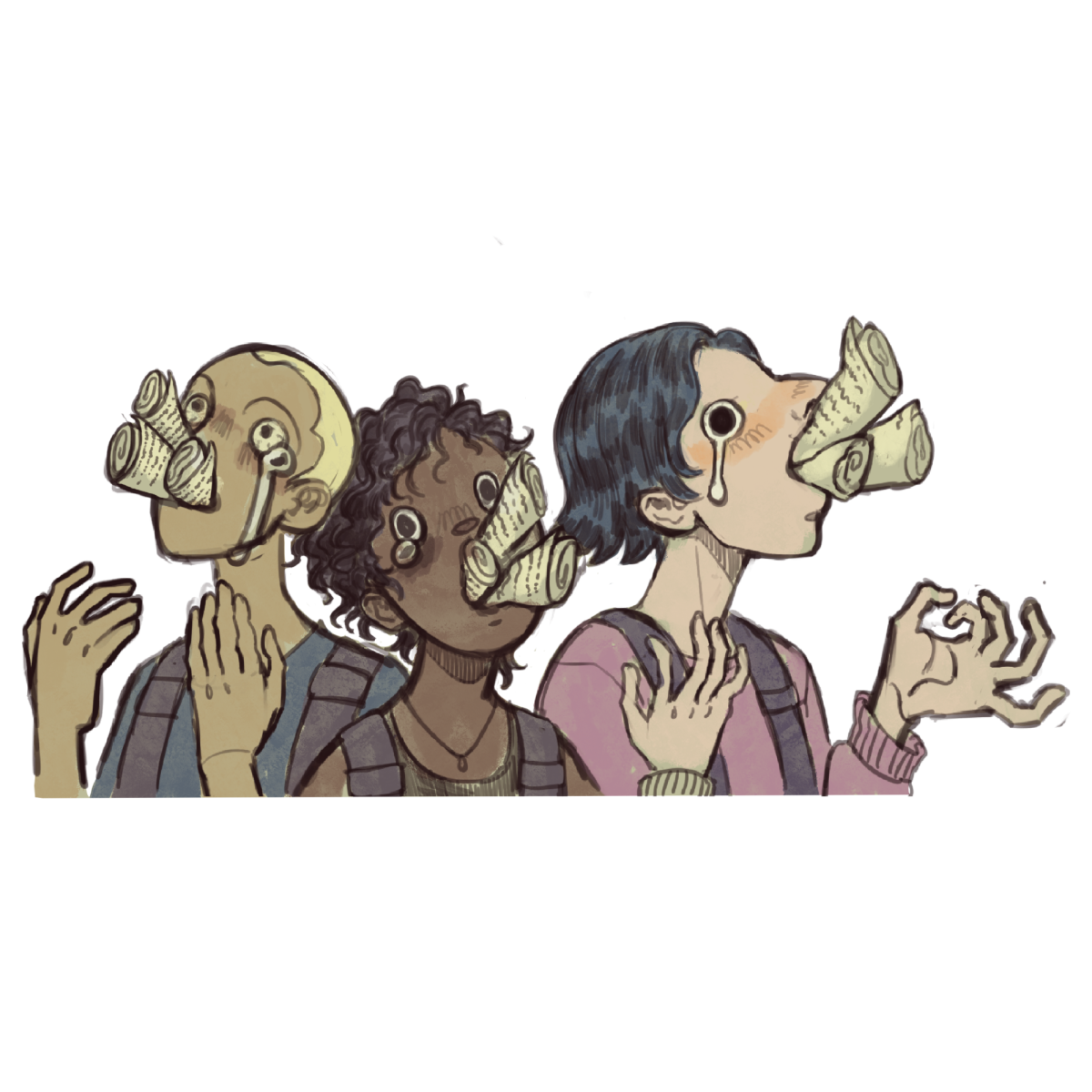
After reaching a historic low in 2023, the gender wage gap in the U.S. is widening once again. For the second year in a row, the U.S. Census Bureau reported a decline in women’s earnings relative to men’s — from 82.7% in 2023 to 80.9% in 2024. In other words, women earned roughly 81 cents for every dollar earned by men last year. Over the past two decades, this figure had shifted slightly upwards, but what once seemed like slow and steady progress has begun to snap back. This shift reveals how fragile equality remains when the system was never built to hold the stretch.
Even though college-educated women in the labor force outnumber college-educated men by 50.7%, earnings remain disproportionate. The gender wage gap is like a rubber band: Gen-Z women may see the stretch in experiencing a much narrower pay gap than earlier generations — earning 92% of what their male counterparts make — but the snap of reality, motherhood, widens the gap. At around age 30, when women advance in the ranks or decide to have children, the motherhood penalty catches up.
This penalty remains one of the most archaic yet persistent drivers of inequality in the workforce. Defined as “the phenomenon by which women’s pay decreases once they become mothers,” it is rarely temporary. Women’s earnings hardly recover, often worsening with inflation, turning family formation into both a punishment and an economic setback. This is not the result of little ambition, but of structural barriers: unpaid leave, unaffordable childcare and outdated workplace expectations assuming that caregiving is a woman’s default role.
A 2021 Duke University Press study identified parenthood as a “key contributor to inequality.” In contrast, men experience a “fatherhood bonus” with an increase in pay and perceived reliability once they have children. This inequality enforces how deeply gender-based these expectations remain in modern society.
A poignant cultural response to this has been the online romanticization of the “tradwife” and “stay-at-home girlfriend” trends, idealizing a return to traditional domesticity. These aesthetics often frame dependence as empowerment, offering an illusion of choice in a system that limits the economic freedom of women. When financial inequality persists across generations, nostalgia for submission begins to look less like preference and more like adaptation.
The reality is the rubber band stretches even thinner for non-white women. In 2023, for every dollar earned by a white man, Hispanic women earned just 51 cents, Black women 64 cents, Native American women 52 cents and Asian American, Native Hawaiian and Pacific Islander women as low as 50 cents. The system strains under its own inequity and tightens around those it was never designed to hold. Real progress demands structural reform: expanding parental leave, enforcing pay transparency and investing in affordable childcare to keep the rubber band from snapping.
Learn more or take action through the National Women’s Law Center and the National Partnership for Women & Families.