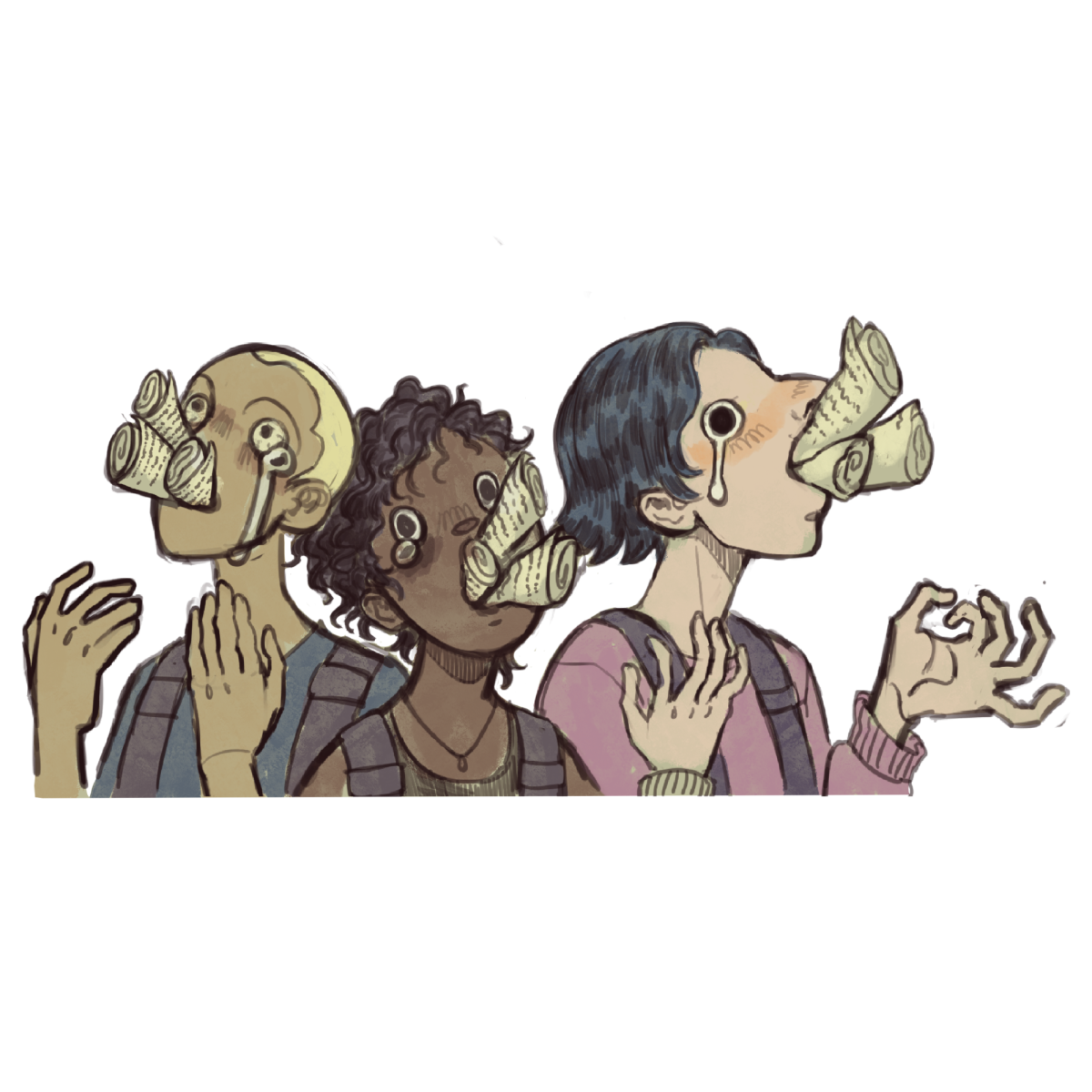
Artificial intelligence chatbots have surged in popularity in the last few years. ChatGPT, one of the most widely known AI chatbots, experiences traffic of roughly 4.6 billion people per month. Recently, the Center for Democracy and Technology surveyed 800 teachers, 1,000 students and 1,000 parents and reported one in five teenagers had or knows someone who has had a romantic relationship with an AI chatbot. AI is taking advantage of vulnerable youth and isolating them, all to make tech corporations more money.
Last year, 14-year-old Sewell Setzer took his own life after months of interaction with a bot on the popular site Character.AI. C.AI markets itself as a unique chatbot able to roleplayfictional characters as well as real people. The lawsuit that Setzer’s mother, Megan Garcia, filed against the company claimed the website’s safeguards failed to protect Setzer from having damaging conversations with bots, writing that the company “intentionally designed and programmed C.AI to operate as a deceptive and hypersexualized product,” and was meant for users to grow dependent on it.
NBC has since reported that the company attempted to argue the AI had the right to free speech — reasoning that U.S. District Judge Anne Conway struck down. The business model of companies like C.AI targets and exploits young people, keeping them engaged for as long as possible.
In a similar case, 16-year-old Adam Raine died in April. His parents, Matt and Maria Raine, have filed a lawsuit against ChatGPT, alleging the teen held concerning conversations with the chatbot, and that “ChatGPT actively helped Adam explore suicide methods” instead of terminating the session or offering help. According to chat logs, the bot said he does not owe his parents survival, and he should avoid opening up to his mother. OpenAI CEO Sam Altman stated prior to the incident in a TED conference in April that safeguarding an AI is difficult and involves a lot of learning, and, despite the challenge, he was proud of what they had accomplished.
OpenAI’s model had some blaring safety concerns, though. Human lives should not be guinea pigs. It should not take the death of a teen for a company to tighten the reins on AI’s capabilities.
AI companies have repeatedly proven they are unable to control their creations, their products are unsafe for young audiences and they are unable to handle their problems responsibly. These corporations’ constant lack of care and integrity is beyond terrifying. Users must hold tech corporations accountable, turn away from AI and seek real human connections.