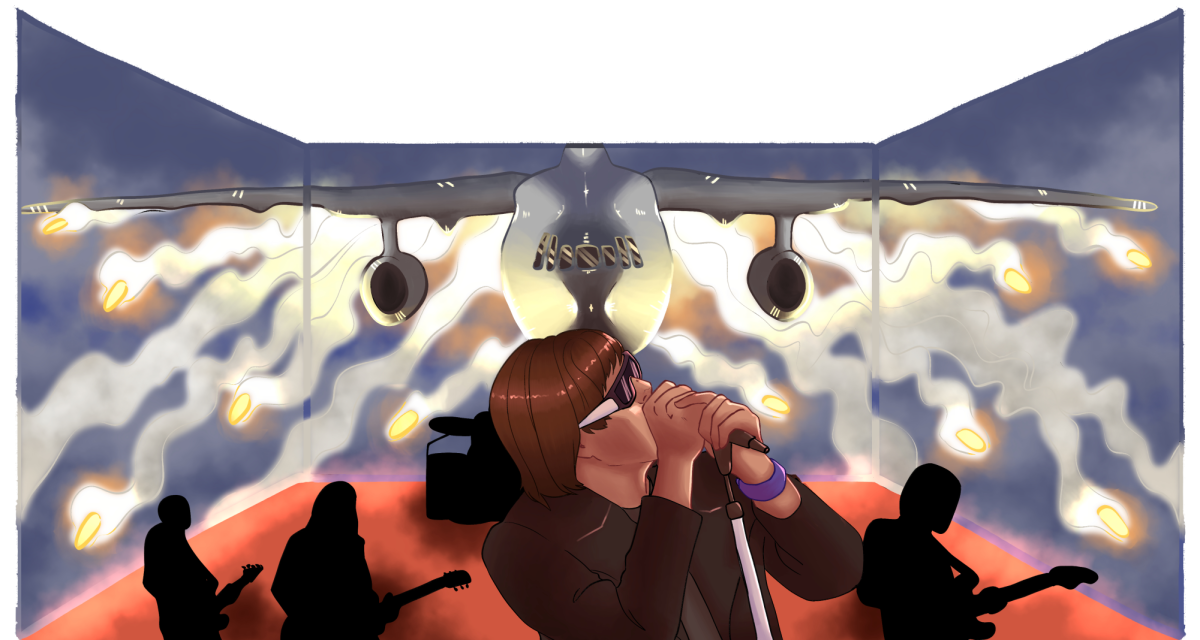
Though President Donald Trump campaigned on “no new wars,” he has made no secret of his antagonism toward the Venezuelan government, headed by President Nicholas Maduro. Except perhaps Iran, no country has drawn the ire and attention of Trump like Venezuela, a feeble but hostile nation to the U.S. in geopolitical terms. Just last week, amidst the largest mobilization of naval assets near South America in two decades, Trump refused to rule out American troops on the ground in a direct military engagement.
American-Venezuelan relations have not undergone significant changes that would warrant this type of posturing. American citizens are understandably questioning why the drums of war are suddenly beating again after 20 years in Iraq and Afghanistan. A conflict with Venezuela under the current circumstances, troops on the ground or not, would be an immense miscalculation by the U.S. that would needlessly injure American interests and global standing.
Firstly, it is not a debate of whether the U.S. would win a hypothetical war with Venezuela. American forces only needed 20 days to topple Saddam Hussein’s regime during the 2003 invasion of Iraq, and the U.S. certainly can replicate that feat for Maduro. Rather, the issues arise as soon as the conflict is “won.”
Venezuela is already in a precarious state. Infrastructure decay, food scarcity and hyperinflation continue to plague the nation under its president. If Trump were bemoaning the influx of Venezuelans coming into the U.S. through the southern border, nothing can prepare him for the millions of war refugees that would be born from this conflict. These same refugees will then go on to make the dangerous journey north to America for salvation.
The human toll of the conflict is not something that will disappear with time but rather requires a plan with immediate action that cannot be outsourced to similarly fragile neighboring countries. Failing to do so will result in an unmitigated crisis involving deaths of despair and a dispersion of people that risks destabilizing nearby Colombia and Guyana. Before policymakers realize it, they will have entered another Afghanistan, a protracted 20-year conflict with no easy off-ramp. It is reasonable to assume that the Pentagon under Secretary of Defense Pete Hegseth — a clown — has not even thought that far ahead.
Though Trump is certainly trying to etch his own corollary to the Monroe Doctrine, he has neither the foreign policy expertise nor the diplomatic tact to conduct this war in a way that does not result in a weaker and more isolated U.S. He has not made one attempt to even sell the American people on why they should send their sons and daughters to die in South America.
American power is predicated not solely on its military but also on its numerous allies and soft power. A war with Venezuela would alienate those allies and exhaust the goodwill of anyone still aligned with the U.S., which other adversaries could exploit. Congress must act to constrain Trump’s war powers and prevent a colossal, self-inflicted misstep.