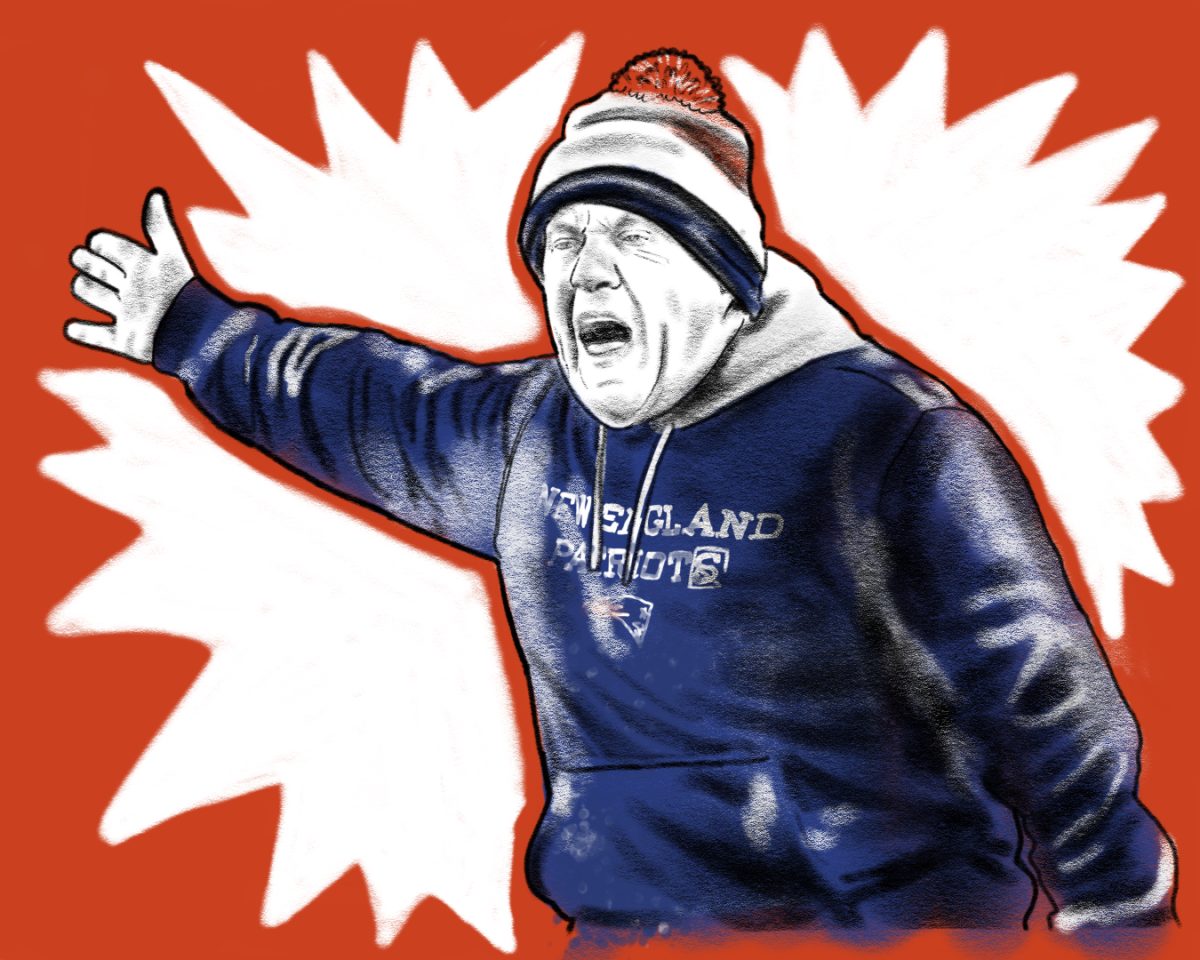
There are moments when the Pro Football Hall of Fame is supposed to feel inevitable — when a name appears on the ballot, and the process becomes a formality. Bill Belichick’s first year of eligibility should have been one of those moments. Instead, the Hall managed to cast doubt not on Belichick’s résumé, but on the credibility of the institution tasked with honoring it.
Belichick, one of the most decorated coaches of the Super Bowl era and the architect of the most sustained dynasty the league has ever seen, failed to receive the required 40 of 50 votes needed for first-ballot induction. He fell short despite owning eight Super Bowl rings, six as a head coach and two as a defensive coordinator, along with more playoff wins and division titles than any coach in NFL history. The result stunned fans, players and even members of the voting body itself.
At least 11 selectors chose not to support him on the first ballot. One Hall voter, Vahe Gregorian of The Kansas City Star, publicly acknowledged that he did not vote for Belichick, not because Belichick was unworthy, but because he chose to allocate his vote to three senior candidates instead. In other words, Belichick’s candidacy became collateral damage in a system that forces voters to prioritize scarcity over merit. First-ballot status is not meant to be a rotating charity. It is meant to identify the most obvious, undeniable figures in football history, and few names have ever been more obvious than Belichick’s.
Another troubling element came from longtime Indianapolis Colts executive Bill Polian, who initially admitted he could not remember with full certainty whether he voted for Belichick. Polian’s credibility has already taken hits in the past, including his infamous 2018 claim that Baltimore Ravens quarterback Lamar Jackson should change positions. When individuals entrusted with shaping football’s legacy approach the process with that level of carelessness, the integrity of the entire system suffers.
The Hall has also created this environment through past decisions. It has a track record of forcing iconic figures to wait for reasons that extend beyond football. Terrell Owens, one of the greatest wide receivers in league history, waited three years because voters disliked his antics and personality. That precedent still looms, and shows how easily personal bias can seep into what should be a straightforward evaluation.
Belichick’s career is not without controversy. Spygate and Deflategate remain stains on his résumé and were clearly discussed behind closed doors. Those moments gave voters an excuse to treat his candidacy as a morality case rather than a football one. But Hall of Fame history is filled with far more serious offenders. George Preston Marshall, one of the league’s most notorious segregationists who resisted integration until federal pressure forced his hand, still has a bust in Canton. O.J. Simpson, whose legacy is tied to murder charges and felony convictions, remains enshrined as well. If those figures continue to be honored despite actions that extend beyond competitive controversy, it becomes difficult to argue that Belichick’s scandals should outweigh decades of championship-level success.
What ultimately separates Belichick from nearly every other coach of his era is how deeply he changed the game. Long before defensive disguise became standard practice, Belichick helped design systems that blurred coverage identities, matched receivers downfield and forced quarterbacks to hesitate after the snap. During his time with the New York Giants, his defensive game plans shut down elite offenses and altered how teams approached situational football. Many modern defensive concepts trace directly back to his influence, and NFL playbooks look different today because Belichick helped reshape them. Add in eight championships, the longest modern dynasty in league history and a coaching tree that spread across professional and college football, the case becomes irrefutable.
If football ever carved a Mount Rushmore, Belichick would belong on it. His gold jacket is inevitable. What will not fade is the memory of a Hall of Fame process that failed its simplest responsibility: recognizing greatness when it stands directly in front of them.