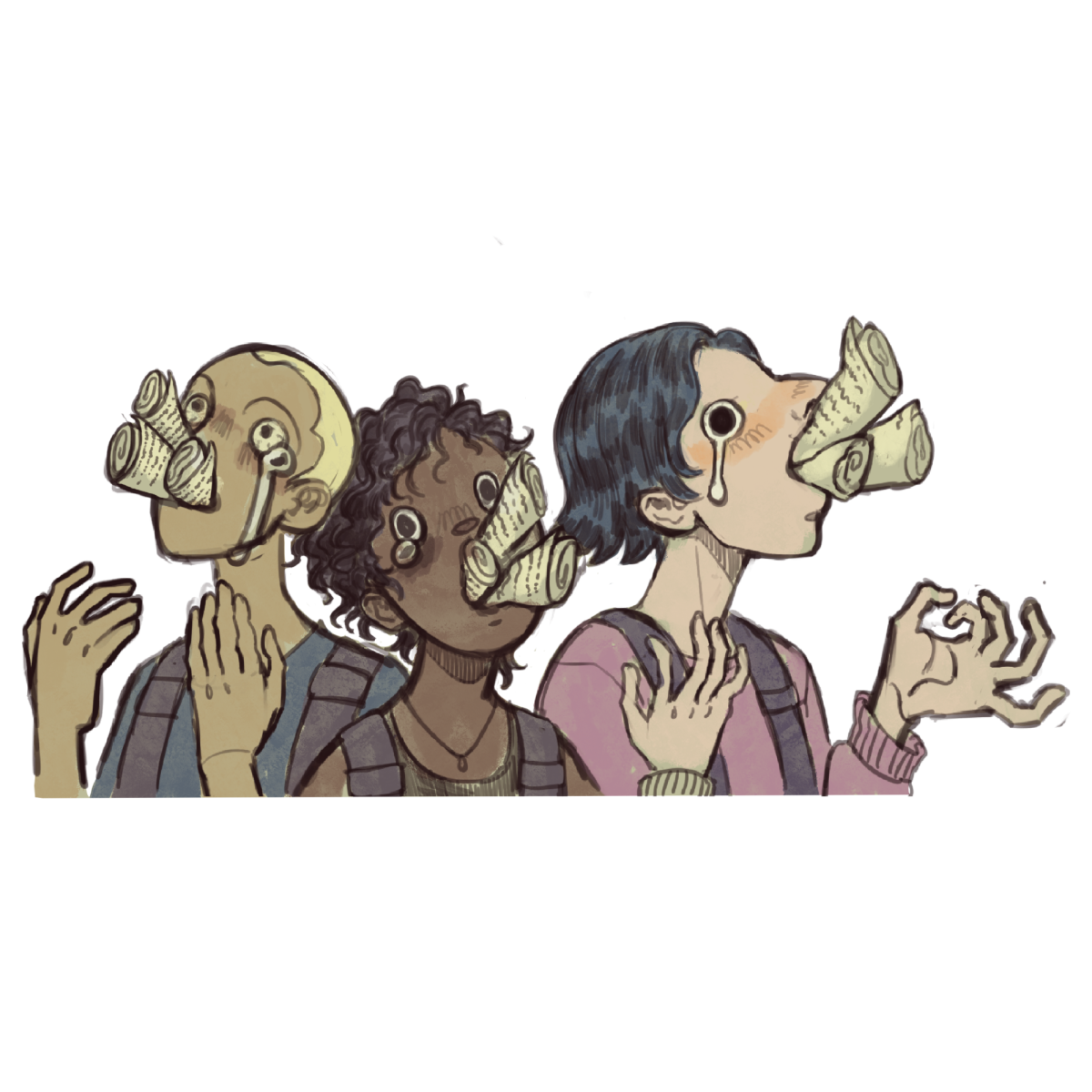
A UT San Antonio freshman, bright-eyed and bushy-tailed, approaches the H-E-B Student Union on March 3. It is Election Day, and after their classes, studying for midterms, attending office hours and meeting with peers for group projects, the student is finally free to cast their ballot. Upon entering the building near the first-floor ballroom, they are faced with a line. No matter, they will go to the back and wait for their turn. However, the line seems to grow longer the deeper the student ventures into the building.
It stretches to the opposite end of the first floor. The wait time is three hours. If time was money, the freshman would have gone bankrupt. The cost of civic engagement should never be this steep.
Young voters, aged 18-29, already face numerous challenges when casting their ballot. Voter ID laws make it difficult for young people without a driver’s license to supply valid identification. Students attending universities outside of their home state, city or county run into trouble registering to vote and figuring out where they are eligible to vote. Over 25% of 18-29 year-olds who did not vote in 2024 cited time constraints and a lack of information as their reason for not voting, shedding light on the burdens they face.
UT San Antonio students are fortunate not to have to worry about commuting to a polling site since one is available at Main Campus, but the wait time on Election Day negates the benefit for many students.
Seeing as around 40% of full-time students and 74% of part-time students are employed, the three-hour wait time on election day that follows hours of researching who and what is on the ballot may be the last straw that stops them from casting their vote.
According to 2024 Texas Statutes Election Code Title 8, the number of voting machines installed at each polling place is based on how many votes were cast at that location in previous elections, the number of registered voters in the area and the number of machines that are available.
The UT San Antonio polling site desperately needs more voting machines to accommodate the large volume of voters on Main Campus. The Bexar County Election Board is responsible for procuring election supplies, including machines. The board can be reached via email [email protected]. Students must advocate for additional equipment to ensure they have the time to make their voices heard in the elections.