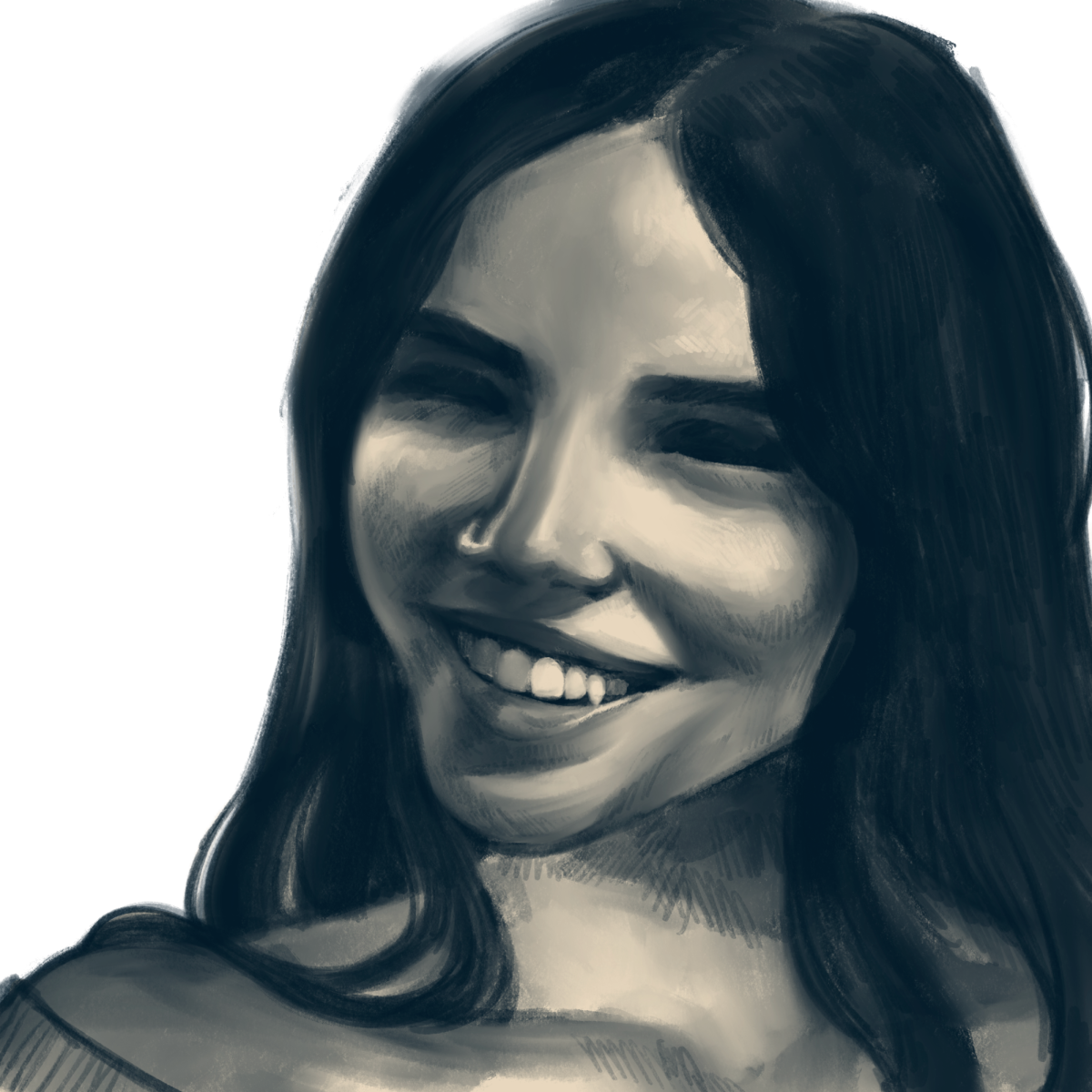
There is a rare kind of album that does not demand attention; it earns trust. South African singer Alice Phoebe Lou’s “Oblivion” does not beg to be heard; it sits beside one, softly unlocking the audience’s ears. The album is an ethereal body of work that carries its melancholy like light spilling through a crack in the wall.
Her sixth full-length and first fully self-produced record, “Oblivion,” feels like Lou has mastered the ability to breathe within her stillness. Through this album, she finds solace and strength in vulnerability, love and the quiet moments of transition.
Where her earlier works, such as “Glow” and “Paper Castles,” shimmered with celestial indie pop, “Oblivion” returns to her stripped-back folk roots — the simplicity of a guitar, a voice and the courage to sound vulnerable. The album’s greatest strength is its fragility.
“Sailor,” opens like a soft sunrise over foggy water. “I’m usually hopeless in love,” Lou sings — a line that might sound self-deprecating if not for how tenderly she says it. Hope flickers between the words, a kind of quiet faith in connection despite the fear of loss. The song feels like forgiveness — not for others, but for herself.
“Pretender” and “Mind Reader” linger in the space between devotion and exhaustion. “I’m not a mind reader, but I will try for you,” Lou sings in “Mind Reader” as her voice floats above the sparse guitar. It is the sound of yearning, not dramatic or grand but unguarded.
The title track, “Oblivion,” is the album’s glowing celestial core; it sounds like the moment before tears fall. “I stop feeling lonely when I look at you,” she murmurs, her layered vocals orbiting each other like planets in a solar system. The song makes the listener feel like they are in the middle of the universe while it is crumbling. At this point in the album, one realizes they have reached a place where performing has stopped, and simply existing with the music is enough. It transcends in its stillness, as if Lou has just learned that beauty and grief can exist in the same breath.
“Old Shadows” is the album’s most revealing song. Lou confronts the ghosts of her past — the men she loved before she knew how to love herself — with the line, “Don’t you worry when I come with daggers out / I’m fighting old battles.” Her voice cracks but never breaks as she explains that she is not used to real love. She offers herself closure through the poetry. That is what is so captivating about the lyrics of this album; they are not genius or complicated. They are real, genuine and sweet. They speak to the listener rather than at them.
By the time “Skyline” arrives, the ambience of the album feels lighter. “I am coming / I am lettin’ the sun in,” she sings, her voice lifting like a sigh of relief. It is the sound of acceptance. Serenity is found not in resolution but in release, packaged in a melodic song where Lou’s voice modulates.
“Oblivion” is fragile yet fearless. It rejects perfection, letting every tremor and breath linger. Lou’s choice to self-produce feels almost symbolic — a reclaiming of voice, of vision and of vulnerability as strength. She tells the truth quietly, letting it reverberate away. Following the album’s release, Lou is scheduled to tour Europe and North America later this year and spring 2026.