A small gathering of about 30 people met in the Travis and Harris rooms of the H-E-B Student Union. While the group remained relatively quiet, they were abuzz with hushed anticipation for the 2025 Cowden History Symposium. Six of UT San Antonio’s finest graduate students in its history department presented their research to faculty, family and friends on Oct. 30. These presentations were no mere lecture; they were public history in the making.
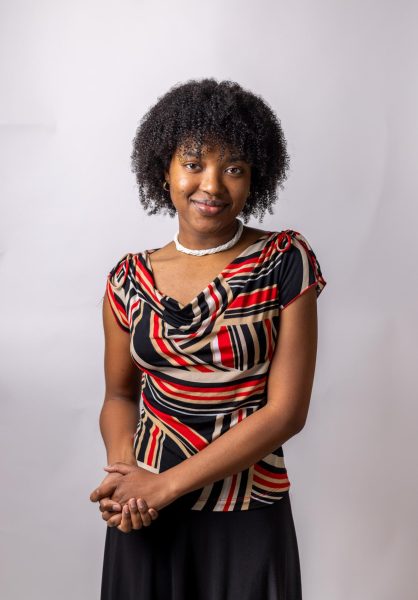
Public history is the collaborative study and practice of history. Those who embrace it aim to make their findings accessible and useful to the public. Graduate student Faith Mason, the first presenter during panel one of the symposium, is among those who embrace the study.
“I do believe that there’s a critical importance of engaging with the public through something known as public history,” Mason said. “Whether that’s through something similar today, or museums, podcasts, things of this nature, to where people who have committed large amounts of their life to studying certain topics can be able to engage with the public and answer questions.”
Mason’s presentation, “Schools of Liberation: How Minority Communities in Texas Built Their Own Educational Pathways,” meticulously recounted the many ways minorities fought for their education when white society held them back.
“It’s just amazing that it’s kind of a reoccurring theme of women just taking up the mantle of building these institutional communities and learning spaces for their children so that they’re not left behind,” Mason said, recalling the most fulfilling part of her research.
Two more graduate students presented their research to the small crowd after Mason. One addressed the difference in how madness was medically treated according to race in the Antebellum South. The other revealed how they helped map historical sites around Texas, concluding the first panel.
Colleen Goulden went last out of the three remaining graduate students of the second panel. Her presentation, “A Disease of Poverty: Diabetes’ Historical Evolution,” evaluated diabetes’ treatment and prevalence throughout history from the perspective of the humanities. According to her, the humanities “gives us critical understanding to our very diverse population.”
“It helps us understand each other, and it helps us understand why things happen the way they do, why we are the way we are,” Goulden added. “Being able to research the historical context behind diabetes and what makes diabetes prevalent in specific communities, it really provides a different lens into the diabetic epidemic.”
The six graduates amazed those in attendance with their work. The audience’s applause resonated across the room. Future Assistant Professor Dr. Halee Robinson delivered the keynote address of the symposium. She too commended the work of the students.
“I think a lot of the presenters here today do such wonderful work, and it [makes] what they do accessible to public audiences,” she said.
Robinson’s research, “Black Texans and the Intimate Histories of Incarceration,” displayed heartbreaking, handwritten letters from relatives of incarcerated Black people pleading for pardons from community leaders.
“I work a lot on stories about people,” Robinson shared. “I think the most rewarding thing is to see and illuminate the histories of people in the past, people who have struggled so much and who experience so much violence, especially at the hands of the state, and to really illuminate their voices and give their perspectives.”
The 2025 Cowden History Symposium played a pivotal role in students’ engagement and advancement of public history. While some may claim it is hard to see the future in history, the accomplishments of students like Mason and Gaulden function to refute such claims.
“Maybe government or political figures might want to challenge, and history isn’t important,” Goulden suggested. “But in reality, history can reveal so much about America, about people in general. When we ignore history, we limit our understanding of the world.”