Not many expected UTSA women’s basketball to step back into the same position it held a year ago. Last season ended with a 26-5 record, a perfect 13-0 mark at the Convocation Center and an American Conference regular-season championship. This season has unfolded much differently. A rebuilt roster, expanded roles for returning players and injuries have reshaped expectations. Through it all, the Roadrunners have stayed competitive, holding a 9-9 overall record and a 4-3 mark in conference play. It has not been clean or comfortable, but UTSA has remained in the middle of the league race when a deeper drop could have been expected.
That stability has been driven by UTSA’s defensive structure. The ‘Runners are allowing just 57.9 points per game, the best scoring defense in the American, while holding opponents to a league-low 36.9% shooting from the field. UTSA has consistently forced teams into tough half-court possessions by contesting drives, shrinking the paint and limiting clean looks at the rim. That has helped offset an offense that ranks near the bottom of the conference at 60.3 points per game. UTSA’s +2.4 scoring margin reflects the tradeoff: winning games by controlling tempo, finishing defensive possessions on the glass and keeping opponents uncomfortable enough to grind out close wins.
The Roadrunners have also stayed afloat because of several players making meaningful jumps. Senior forward Cheyenne Rowe has become the team’s most dependable night-to-night engine, scoring 12.6 points per game and grabbing 8.8 rebounds — both top-10 marks in the American. When UTSA needs a stop, a rebound or a possession that has to end with a good shot, Rowe is usually involved.
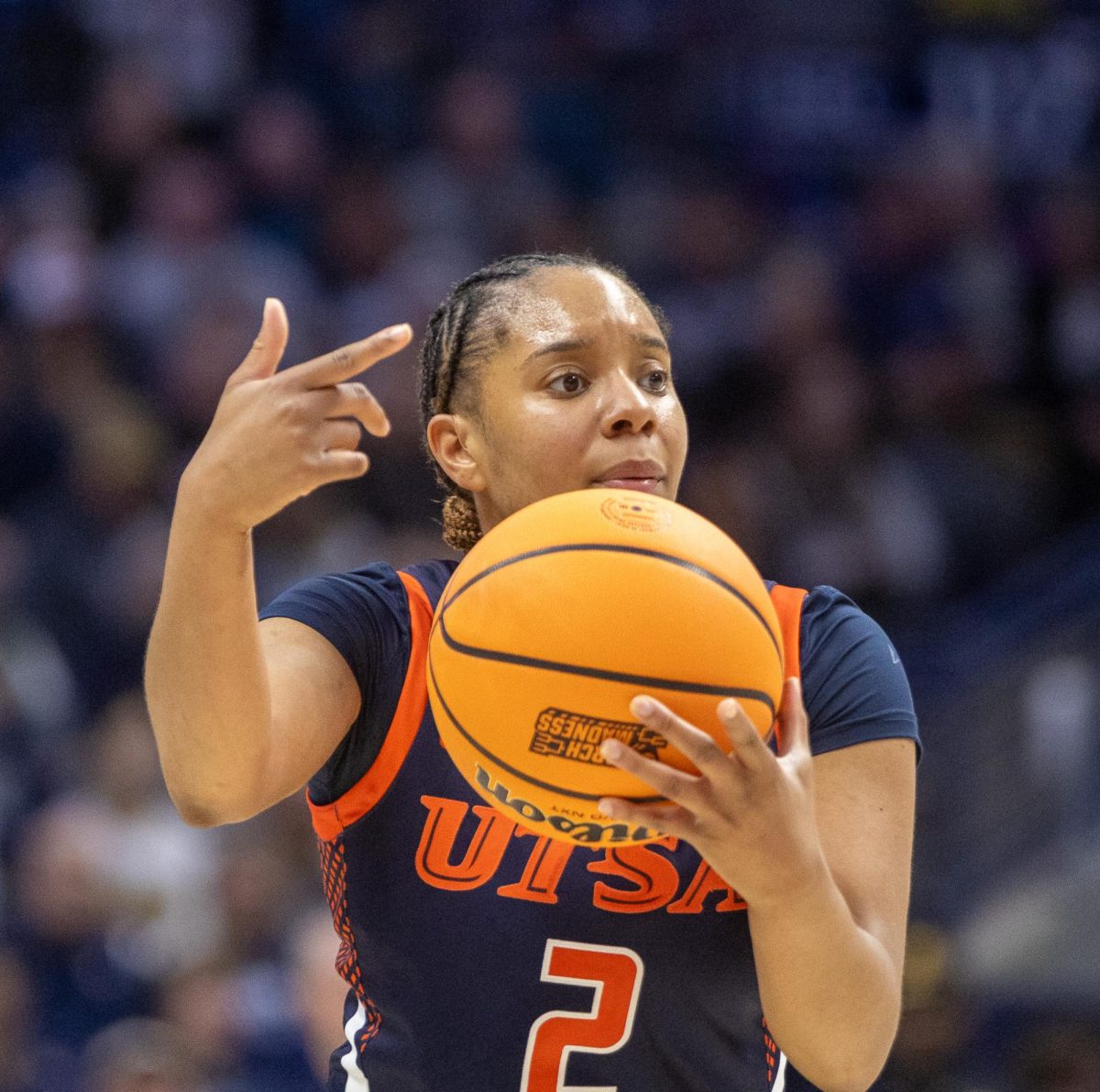
Transfer junior guard Ereauna Hardaway has also given the Roadrunners structure and late-game composure. Hardaway is third in the conference at 5.1 assists per game, and her assist-to-turnover ratio is among the American’s best for primary ball-handlers. In close finishes, she has been the organizer, the one who can steady the offense and still make the play that swings a game.
Sophomore guard Mia Hammonds has also stepped into a larger role on both ends and shown the most growth on the roster. Her size and lateral quickness allow the ‘Runners to switch defensively while still protecting the rim in help coverage. Offensively, she has become a reliable secondary scorer by attacking the basket and finishing through contact. The expanded role has positioned Hammonds as a potential replacement for the production Jordyn Jenkins once provided.
Even with the individual growth, the obstacles have been just as clear. UTSA has struggled with opponents’ runs. Losses to the University of Nevada, Las Vegas, the University of South Florida, East Carolina University and Memphis University all featured extended scoring bursts that flipped momentum. Slow offensive starts have also created uphill battles. Against Memphis, UTSA scored just five points in the opening quarter and 14 in the first half. Against UNLV, the Roadrunners had a whopping two points on an abysmal six percent shooting in the first period, leaving no margin for recovery. Ball security remains another issue. UTSA commits 17.8 turnovers per game while forcing 16.9, keeping the margin close but limiting separation opportunities.
Health has also played a role. Junior forward Idara Udo has dealt with availability issues that have impacted frontcourt rotation stability. When the ‘Runners have been able to use her interior scoring and rebounding consistently, the offense has flowed better through the paint. Despite sophomore center Emilia Dannebauer helping fill that gap by providing rim protection and strong decision-making out of the post, the rotation remains thin against physical conference opponents.
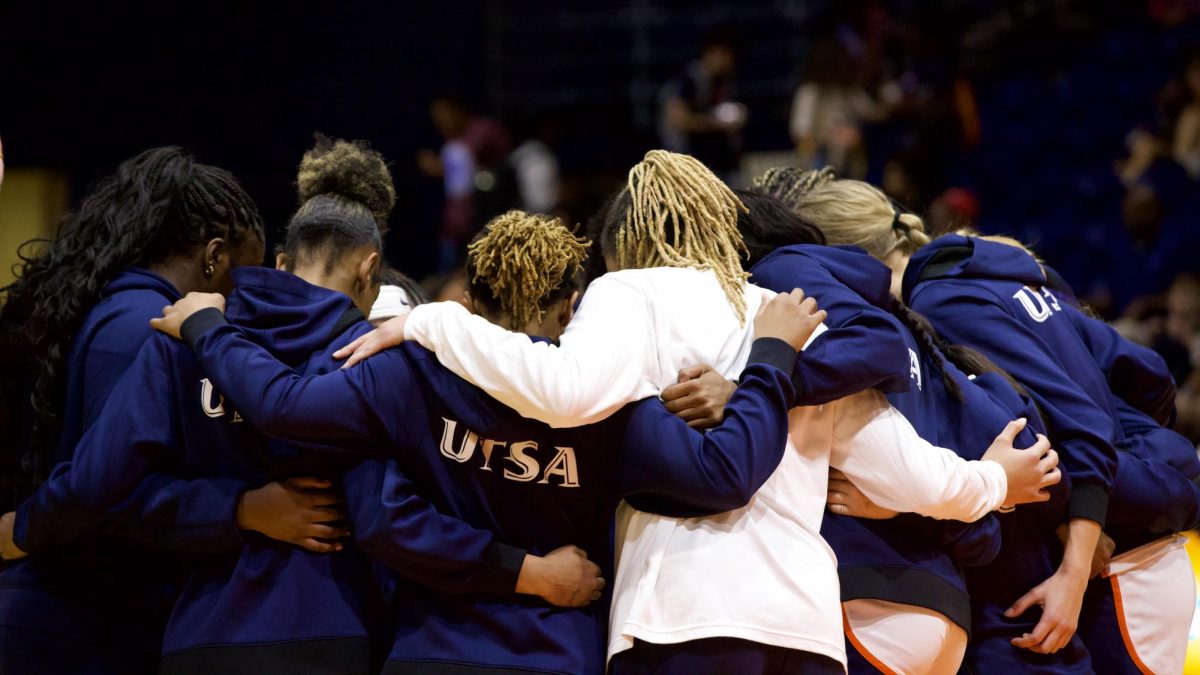
The grade, considering the circumstances, is still a B+. UTSA has not looked like last season’s group, but it has not needed to. This team is learning how to win in different ways, and the fact it is still sitting in striking distance says the culture has carried over even as the personnel changed. If the ‘Runners can cut down the droughts, tighten the turnover stretches and avoid letting games swing on opponent runs, the defense is good enough to make UTSA a problem for anyone in March.