Driving down Nogalitos Street in transit to Hemisfair park for the 13th annual Muertos Fest, a San Antonio native cannot help but notice an identity shift. The brick-chipped, debris-like strip mall has been rejuvenated. Pristine black paint absorbs the heat emitted from potholes and cracks in the narrow roads. Wealth has entered the Palm Heights domain.
The descent downtown begins. Crossing the train tracks on Alamo Street into Southtown, the city dons a new wardrobe. The roads exchange the squeaky brakes of a 2003 Chevrolet Malibu for the quiet hum of a Tesla. The corridors of the local taqueria fade into a melodiously alluring bedroom-pop tune. Suddenly, a 1998 Dodge Dakota does not feel like it will fall apart — that was simply an illusion of the disregarded, knobbly asphalt.
A San Antonio native has lost all methods of navigation. These uncharted territories have evolved the identity of the Alamo City, but in the process, one cannot forget to remember the San Antonio of the past: a city defined by its people’s dedication to one anotherchri. This sentiment rang true as one entered the Muertos Fest grounds.
Altars bring to light the local communities and families of San Antonio along with cultural influences such as Mexican actor Roberto Gomez Bolanos, otherwise known as Chespirito. Local high schools and middle schools alongside biker clubs leave offerings for deceased family and friends. Varying levels of community can be seen at each altar, where one finds the heart of San Antonio.
Unfamiliar faces compile in the altars’ photos, yet one easily becomes tethered to each person, as if they have a neighborly relationship. Compassion skips across the Hemisfair’s wading pool into the hearts of altar viewers, as if the jovial “hoorahs” of the children playing fill an attendee with memories of an earlier time.
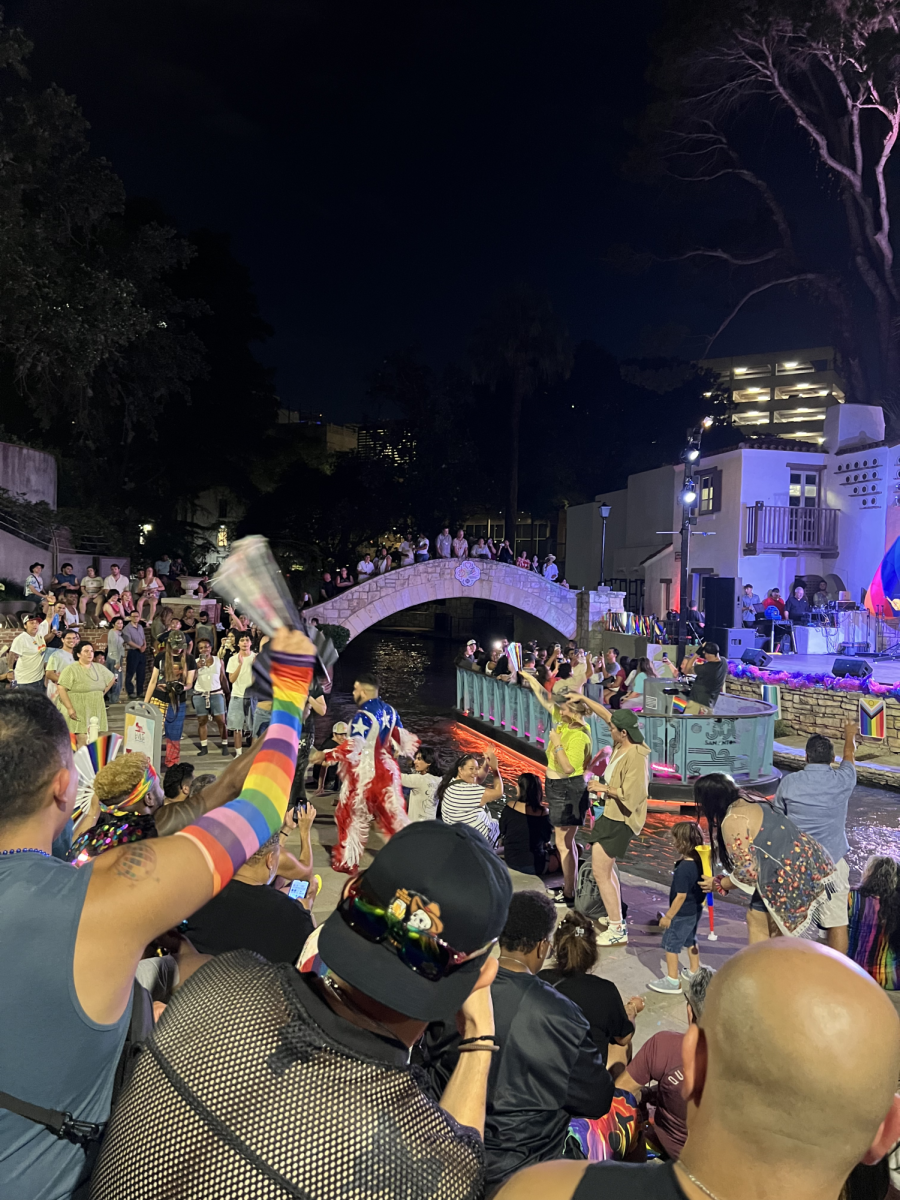
Later in the night, the festival’s parade commences. Matachines lead the procession in ritual attire followed by families and organizations marching to honor passed loved ones. The parade culminates in the presentation of giant catrinas, marking the procession’s end and signaling to the crowd to turn their attention to the presence of the community.
A final moment in the subliminal confidence of Muertos Fest becomes juxtaposed with the construction railing that lines Hemisfair park — a sign of hesitation for the city and its people.
A city’s survival is built on its adaptability and development, yet this evolution risks alienating the very people who have melded San Antonio’s identity. Walking through downtown San Antonio with road and sidewalk closures littering the landscape clouds the city’s identity. The landscape does not quite have the familiarity of the strangers found in the altars’ photographs.
At Muertos Fest, solidarity rang throughout the altars.
“I feel like a lot of people, even if they don’t come from the same background or if they just genuinely don’t even know each other, they truly can bond over having a loved one that has passed away,” sophomore criminal justice major Julissa Ferreira commented. “You’ll see a lot of community by figuring out that you share a very beautiful thing about death.”
This bond transcends death. It is the bond of a city. Without the people of San Antonio, Muertos Fest could not have been a success. San Antonio’s identity is not defined by its status as a metropolitan city, by a corporation nor its politics. The city creates its identity through the sense of belonging its citizens have. Muertos Fest reminds festivalgoers of this community each year, and offers the opportunity to remember a San Antonio that may soon become forgotten.